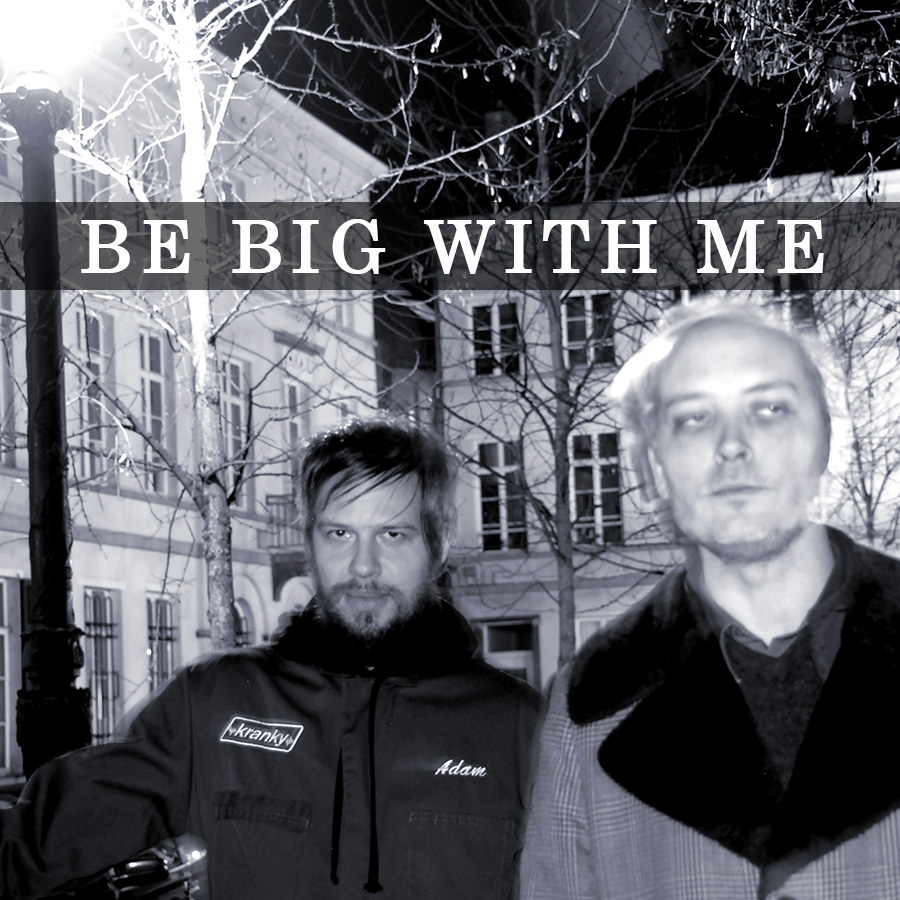
Anyway, at the aforementioned later point I decided I should let one of the Lids know I'd captured their (for me) trance-inducing performance on a high quality digital recorder in FLAC format using a microphone clipped to my shirt collar. Doing so created a risk, you see, that Wiltzie would take my gesture as a violation of his intellectual property—although my brother had interacted with him over email before, ending up receiving a free Lid tshirt shipped to Springfield, Illinois, from Brussels, Belgium, where Wiltzie was living. The two Lids had even been kind enough to accept my brother's praise following the Staerkel show and then to sign[1] his copy of their 1998 CD, Per Aspera Ad Astra[2]. So I had some hope.
Wiltzie responded after a few days thusly: "It sounds ok? [sic] I am not a big lover of our live recordings, but this one does not make me cringe? [sic] And that's a good thing!" He also mentioned that he might eventually post the mp3 version of the recording to the group's Facebook page, of which I was a liker/follower. To the best of my knowledge, Wiltzie has not ever shared the recording with the Lid fan scene, and given his qualified positive reaction to the thing in the first place, I am not surprised. His and my interaction ended when I sent him a link to download some of my own music—an electric guitar-based ambient piece I'd recorded in 2007 titled "Lives of the Bloated Gas Giant Suns"—which had been inspired by a lot of the listening I'd been doing those days to Lid music, particularly their 1999 album and (to me) masterpiece, The Atomium.
I suppose I was hoping he'd hear my work as well as the Staerkel recording and appreciate them so much he'd get them published in some form, thus leading for me to an increase in artistic recognition and/or monetary wealth. As a minor celebrity, he probably experiences strangers like that at times. Worse, I fear he felt I was taking advantage of our interaction simply in hope of personal gain, and though naturally there was an element of that, I also sought to connect with an artist whom I much admired. Maybe more of the former than the latter existed, but that I'd produced a live recording of his group and shared a piece of my own music directly influenced by them were, I thought, offerings to him in his own language, as it were, I thought he'd have something to say. For whatever reasons I was wrong.
Some people don't take easily to fame; maybe it's unusual when someone does, and perhaps those who do take to it possess a stable enough personality to withstand the pressures of the limelight. Regardless of whatever degree Adam Wiltzie is famous and likes it[3], though, I'd love to know that he knows how some of their Lids work has been the integral soundtrack to moments in my life I would say were utterly sublime, the Staerkel concert being one, but others having been quite a bit more personal and controlled though not without their own qualities of exploration. As a somewhat social person who has attempted to cultivate a public persona, on the other hand, I understand the potential for rewards in taking part in the risky public and more dynamic/chaotic arena of society: there's a moment where one's self esteem is bumped up a notch, at least superficially and temporarily, by the adoration of fans. And yet, that feeling is nothing like the deep sense of well being and health that comes from the long term work of self care.
Personally, a bit of fame hit me in my early twenties when I was the lead singer and guitarist for my own original (locally popular) music group; yet as I write this in my mid fifties, I feel happier, healthier, and more stable than I was at that time. I realize the two are not mutually exclusive. I admire artists of all kinds who obviously have their acts together enough to withstand or even revel in stardom from an early age, and I think those who fall from great heights—Michael Jackson, Kurt Cobain, Amy Winehouse, Jim Morrison, et al.—either became famous before they could become actualized adults or were so damaged during their childhoods that they use and abuse the excesses of fame as destructive coping habits, or both. Or, perhaps some end up too hobbled by their own personality from the start to make it past their 20s or 30s.[4] In any case, stardom is riddled with celebrities who express loathing for fame and who (understandably) complain they would simply like to walk down the street or go out to dinner without being accosted by their fans; conversely, it seems a cliché for "ordinary folks" to sometimes hear such complaints and long to have such problems.
What a complex though revealing thing—this desire for recognition pushed to its limit! If we were all brought up in the kind of environment our species needs, there would still probably exist a drive for public acknowledgement of one's virtues, but it wouldn't kill us as much, I suppose. Humans are social and therefore competitive animals by nature. We mix innate competition with a healthy dose of culture, and yet it seems to me that sometimes, still these days (albeit a lot, perhaps arguably more often than not), our cultures have become misguided, as if many of us have failed to read some How to Be a Human manual. The result: social structures with largely avoidable self-perpetuating problems, at least in some areas of the planet. Cycles of abuse—ignorance and the inertia of tradition—mean that regardless of what anyone thinks of our evolution, we have some time to go before the majority of people on this world are doing well in any sense. A quick search of today's internet reveals startling facts, such as that approximatelty 3.5 billion humans on Earth currently live on less than $6.85/day, a typical poverty line for middle-income countries. As necessary as upsetting statistics like this might be in order to sufficiently understand human civilization in terms of "living soundly" as one might say, illness relates to the public/private in very particular ways[5]; yet I don't want to get too serious and wander away from Stars of the Lid where the interplay of that public/private dichotomy takes place.
Unless you make it a practice to listen to droning ambient music like I do, you might not know who Stars of the Lid are, or rather you probably don't, and that's fine. This writing doesn't require such knowledge. And yet to a degree, the sounds Wiltzie and McBride crafted have influenced and inspired this particular writer and other artists. Their music is simple to describe[6], since like all carefully and skillfully crafted art it feels evocative, provocative—practically writing the adjectives for you if you let it: sparse, slow, long, meditaive, spacial. Much more difficult, and not supplied by language as liberally, would be conveying an experience of feeling their music. Much like with dreams, the places we visit during musical adventures reveal deeply private realms, regardless of whether it takes place at a stadium concert or in our darkened living room. Even while two people hearing Stars of the Lid's "The Artificial Pine Arch Song" may agree it sounds objectively tranquil, their individual, subjective ideations of that experience could well come out as distinct and personal as their DNA and fingerprints.
That's why when it comes to attempting to make those ideations public we often rely on some which are easier to relay, ones more dichotomous or black and white: "I liked it" (subjectively, opposed to "didn't like") or "it's good" (objectively, opposed to "bad"). Similarly, dreams are intensely private by virtue of being the internal theater[7] in which our creative imagination plays out aspects of our experiences—the stars of our show—and though when we try to describe them to each other after waking, before they sink back into the mind, only if we are linguistically skilled enough can we hope to relate to others even a bit of how they actually felt or feel to us—to evoke something along the same lines of feeling in the other.[8] One interesting fact of them, though, is that our dreams—at least, I should say, our healthy ones—are often of ourselves in social affairs, be they big or small in scope or importance.[9]
This is an important instant where the public and private break down and are less useful as means of describing and understanding than they are as starting points. Once, when I was feeding my baby son a bottle of milk, the morning sun lit the wood floor and Stars of the Lid's "Lactate's Moment" (appropriately) played for us—with us, inside us—and we floated in those currents of sound and each other for minutes on end that felt like an eternity. In that state of half sleep in which my son, the music, the light, the floor, and I differentiated... it all became quite blurry for a good while. At this moment, too, I write this as if in a dream, listening to their "Sun Drugs" over headphones. And yet, as I write I also read this as if I were you, my audience; doing so helps me help you think and feel enough of what I think and feel for me to hopefully call this sentence a success. United via vast networks of words and sounds here, we are together in a civilization. Stars of the Lid made the noise I hear some years ago in a studio in East Austin, Texas.[10] I feel like I go about my life with them, therefore, and in a profound way you are with us right now as well, reading these words and hearing them in your mind or maybe reading them out loud. Here on Earth we are never alone, really, in dreams or in reality, which in fact to me sounds like a whole other duality to consider—some other time and place, perhaps.
Addendum
I first wrote this essay in 2013. Recently, in 2026, I updated it to be more current with events (Brian McBride's passing) as well as more readable. In addition, a Stars of the Lid Forever website now exists which is dedicated to sharing live Lid. And, having gotten in touch with the creator of that site, I can now say that the recording I made of the Staerkel Planetarium show is public.
End Notes
1) "SLOW DOWN FREE T-SHIRT ❤️ A.W." and "TRY NOT TO LOVE ME – B MCBRIDE" happened to be their messages! Back
2) The title derives from a Latin phrase which has poetically often been translated as "through hardships, to the stars", although more literal meanings of aspera could be roughness, severity, or seriousness. Setting aside the clever self-reference with "stars", this title alone causes me to wonder if they and I haven't experienced similar stuff, hardships or otherwise: our fascination with space in the sense of music that expands but also outer space; and the available opportunity for music to help heal our personal damage. Back
3) Not much, really, and not a lot, I think. Back
4) So many popular musicians have tragically died at the age of 27 that pop culture invented the term The 27 Club. And as usual, science has listened. A study published in the British Medical Journal in 2011 found no increase in the risk of death for musicians in a sample group at that particular age. And, while it was not constrained to the age of 27, an increased risk of death in their 20s and 30s was found. The authors go on to add: "This finding should be of international concern, as musicians contribute greatly to populations' quality of life, so there is immense value in keeping them alive (and working) as long as possible." Meaning we should keep up the maintenance of our musicians. (Link, retrieved 2012/12/06) Back
5) Can it be possible to accurately say that "disease" in the sense of the word's roots—"dis" (without) and "ease" (comfort or pleasure)—is an individual phenomenon? After all, our personal conditions seem like social conditions within society, not only because viruses and bacteria can be contagious but also because in a community our statuses sort of interact; the degree to which they do so, of course, depends on our proximity to each other. One might just as well say we have a disease as I have one. Back
6) Stephen Cook of AllMusic writes of their epic 1996 album, The Ballasted Orchestra, for instance, that it "fashion[s] eight floating gems with touches of industrial noise and movie soundtrack atmospherics. No drums or clanging guitars here, just darkish, elegiac slabs of ethereal sound taking up 12 to 18 minutes at a pop. The overall effect is both calming and provocative…. [T]he music will find even the most skeptical in a state of modern-age bliss." (Link, retrieved 2012/11/27) Back
7) Maelstrom: What is "the lid"? Is this like the lid of a jar?
Brian McBride: Yikes, no.
Maelstrom: Ok, so then what is it?
Brian McBride: It's your own personal cinema, located between your eye and eyelid.
(Link, retrieved 2025/12/23) Back
Brian McBride: Yikes, no.
Maelstrom: Ok, so then what is it?
Brian McBride: It's your own personal cinema, located between your eye and eyelid.
(Link, retrieved 2025/12/23) Back
8) Personally, I recall dreams best when relaxed nearly to the point of sleep, and unless some aspect of a dream seems relevant I tend to keep them to myself, which is not to say I feel some sort of solitude in their regard. Rather, a sense of self sort of reveals itself in my dreams, but they also feel like they connect me to society. I almost always dream of people, often of those familiar to me from my past (the family I grew up with, my own family now, and groups from high school and college). But, because their meaning to me is usually so powerful and impossible to adequately convey, I often take the approach of keeping them to myself. Back
9) "Oh, but it wasn't a dream! It was a place! And you, and you, and you, and you were there. But you couldn't have been, could you?" – Dorothy to her family in the movie The Wizard of Oz. Back
10) And they apparently did so using a Tascam Portastudio 424 4-track cassette recorder, the fact of which pleases me to no end, since I used the same model of machine for my own original music in those days. Also I was born in El Paso, Texas, so that too lends a sense of connection and otherwise "bigness" to Stars of the Lid and their music for yours truly. (Link, retrieved 2025/12/25) Back
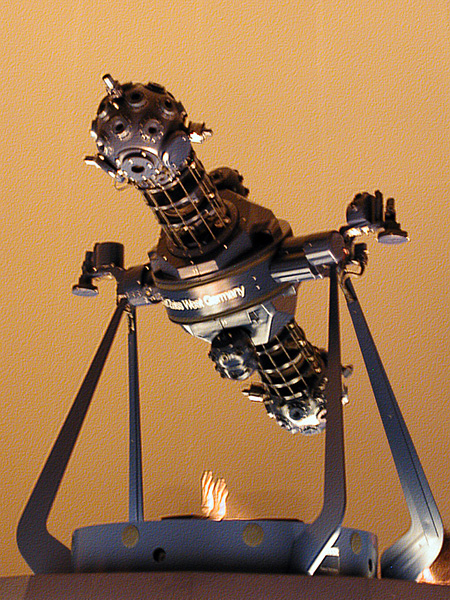
The only photo I took at Staerkel. I never discovered whose hands those were.